West Orange Locksmith Corp Service Team
Local locksmith team
Apr 1, 2026 10 min read
If you own a home in West Orange — especially one built before the 1970s along neighborhoods like Gregory Avenue, Northfield Avenue, or near the historic South Mountain Reservation — there's a good chance your front door is hiding a piece of hardware history inside the door itself. That hardware is called a mortise lock, and while it looks nothing like the simple knob-and-deadbolt combos you'd find at a big-box store today, it's actually one of the most robust locking systems ever made for residential use.
The problem is that most homeowners don't know they have one until something goes wrong — the key stops turning, the latch sticks, or the lock feels loose inside the door. That's where knowing what you're dealing with makes all the difference. This guide will help you identify a mortise lock, understand why they're so common in older West Orange and Essex County homes, and walk you through your real repair and replacement options.
## What Is a Mortise Lock — and How Is It Different from a Standard Door Knob Lock?
A mortise lock is a complete locking mechanism that sits inside a deep rectangular pocket — called a mortise — cut directly into the edge of a door. Unlike a standard door knob with lock and key that simply bores a cylindrical hole through the door face, a mortise lock set is a self-contained unit housing the latch bolt, deadbolt, and often a privacy turn all in one integrated steel case. The lock body itself is invisible when the door is closed; what you see on the door face are the trim pieces — usually an ornate escutcheon plate, a knob or lever, and a separate keyhole.
This design has real advantages. Because the lock case is mortised into the wood rather than surface-mounted, it distributes force across a larger area of the door, making the assembly significantly more resistant to kick-in or forced-entry attempts compared to a basic cylindrical lock. The trade-off is complexity: a mortise lock set has more internal components — springs, cams, tailpieces, and a replaceable mortise lock cylinder — meaning there are more parts that can eventually wear out. For a door that's been swinging open and shut since 1935, that's worth knowing.
## How to Tell If Your West Orange Home Has a Mortise Lock
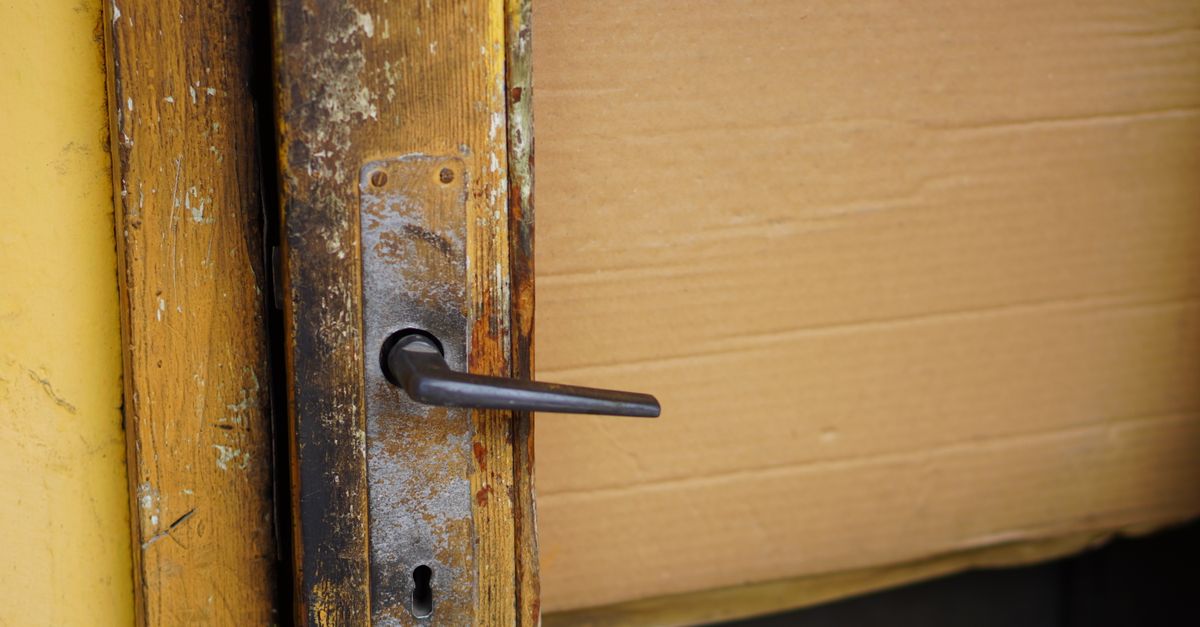
The quickest visual clue is the door edge. Open your front or rear entry door and look at the narrow edge where the latch meets the frame. A standard lock shows a small rounded faceplate about an inch wide. A mortise lock shows a longer, rectangular faceplate — often two to four inches tall — with both a spring latch and a deadbolt bolt visible through separate openings. If you also notice a keyhole on the face of the door that's separate from the knob, that's another strong indicator. Many older West Orange colonials and Victorians feature the classic two-piece escutcheon plate with a round knob above and an oval or teardrop keyhole below — that arrangement almost always signals a mortise lock set.
Brands matter for identification too. Older Essex County homes frequently contain Corbin Russwin mortise lock hardware — a name that appears stamped directly on the lock case or faceplate. You may also come across a Baldwin mortise lock, particularly in higher-end homes, which uses a brass body and is known for its weight and smooth action. If you find either name on your hardware, you're dealing with a quality antique-era lock that a trained locksmith can still service, source cylinders for, or rebuild — so don't assume it needs to be replaced outright.
## Common Mortise Lock Problems in Older Homes — and What Repair Actually Looks Like
The most frequent call our team receives about mortise locks falls into three categories: a key that turns but doesn't throw the bolt, a latch that no longer spring-returns, or a lock that's simply frozen in place after years without lubrication. Each of these has a different root cause. A key that turns without engaging the bolt usually means a worn cam or a broken tailpiece — the internal linkage that connects the mortise lock cylinder to the bolt mechanism. A stuck latch is often a spring failure inside the case. A completely frozen lock typically needs the case removed, cleaned, and re-lubricated with a dry graphite product (not WD-40, which attracts grit).
Cylinder replacement is another common service. The mortise lock cylinder — the separate plug that the key enters — can be rekeyed just like any other cylinder, or swapped out entirely if it's damaged. This is important for homeowners who've just purchased an older West Orange property and have no idea how many copies of the original key exist. Rekeying costs far less than full replacement and leaves the original period hardware intact. If you're unsure which service your lock needs, the honest answer is: have a professional inspect it in person before buying anything. If you'd like a same-day assessment, call (862) 305-9994 — we're available 24/7 and can often arrive within the hour.
## Mortise Lock Set Exterior Door Replacement — When Repair Isn't Enough
Sometimes a lock case is cracked, the bolt mechanism is stripped beyond rebuild, or the door itself has shifted so much over the decades that no amount of adjustment will get the hardware working correctly. In those situations, a full mortise lock set exterior door replacement is the right call. The good news is that the modern market for mortise hardware is active — manufacturers like Baldwin, Schlage, and others still produce mortise-format lock sets designed to drop into the same pocket dimensions as many mid-century cases, which can save significant labor on an older door.
What drives the final cost of a replacement? Several factors: the specific lock set selected (finish, grade, and feature set vary widely), whether the existing mortise pocket needs to be resized, the time of day the work is performed, and travel distance to your location. Our team confirms an exact price before any work begins — no surprise totals at the end of a job. For a mortise lock set on a West Orange exterior door that needs full replacement, expect a conversation about your door's existing pocket dimensions and your preference for period-appropriate versus modern hardware before we quote anything.
## Understanding Locksmith Pricing — What You Should Actually Expect to Pay
Questions like 'How much should a locksmith cost per hour?', 'What is the average call out fee for a locksmith?', and 'What is a locksmith call out fee?' come up constantly, and the honest answer is: it depends on several real variables. For any locksmith service — whether it's a mortise lock repair, a residential lockout, a commercial rekey, or an automotive key replacement — pricing reflects the complexity of the job, the parts required, the time of day (overnight or holiday calls carry different rates), and travel distance. Comparing 'How much does an emergency locksmith cost near me?' or asking 'Is it cheaper to go to a locksmith or dealer?' for key work are fair questions, but a number quoted without seeing the job is rarely accurate.
What we commit to is transparency: our team provides a confirmed, up-front price before any work starts. There are no hidden trip fees revealed after the fact. When customers ask about locksmith costs — including how pricing works versus going to a dealer for automotive key programming — we walk through exactly what the job involves and why it's priced the way it is. That conversation happens before we pick up a tool. For residents across West Orange, Montclair, Livingston, and the surrounding Essex County area, call (862) 305-9994 any time of day or night to get a straight answer on what your specific job will involve.
## Our Full Range of Residential, Commercial, and Automotive Locksmith Services
West Orange Locksmith Corp serves homeowners, property managers, and drivers across the West Orange area with a complete range of mobile locksmith services — available 24 hours a day, 7 days a week. Our residential services include: mortise lock repair and rebuild, mortise lock cylinder rekeying, full mortise lock set installation on exterior and interior doors, standard cylindrical lock installation, deadbolt installation and upgrade, door knob lock replacement, home lockout response, master key system setup, lock rekeying after a move or tenant change, sliding door lock repair, window lock installation, garage door lock service, and safe opening and combination changes. On the commercial side, we handle: commercial-grade mortise and cylindrical lock installation, commercial lockout response, access control entry system installation, electric strike and magnetic lock setup, exit device (panic bar) installation and repair, master key system design for multi-unit properties, and high-security lock cylinder upgrades. For drivers and vehicle owners: car lockout service, automotive key cutting and programming, transponder key duplication, key fob replacement and programming, ignition lock cylinder repair, and broken key extraction from ignition or door locks. Whether you're on Gregory Avenue with a hundred-year-old mortise lock or managing a storefront off Main Street with a malfunctioning exit device, our experienced, insured team is equipped to handle the call.
Frequently asked questions
What is a mortise lock, and how do I know if my West Orange home has one?+
A mortise lock is a complete lock mechanism set into a deep pocket cut into the door's edge, housing the latch, deadbolt, and often a privacy function in a single steel case. To check yours, open the door and look at the edge — a long rectangular faceplate with multiple bolt openings (rather than a small round one) signals a mortise lock. A separate keyhole on the door face below or beside the knob is another strong indicator. Many homes in West Orange built before the 1960s — particularly along older residential corridors near the South Mountain Reservation — still have original mortise hardware in place.
Can a mortise lock be rekeyed, or does the whole lock need to be replaced?+
In most cases, yes — the mortise lock cylinder (the plug the key enters) can be rekeyed independently of the rest of the lock case. This is the most cost-effective solution when the goal is simply to make old keys inoperable, such as after buying a home or losing a key. Full replacement is only necessary when the lock case itself is damaged, when the bolt mechanism is stripped beyond repair, or when the door has shifted so much that the existing hardware can no longer be adjusted to function correctly. A professional inspection will tell you which situation you're dealing with before any money is spent.
How much does a locksmith call out fee cost, and what factors affect the total price?+
There's no single universal number — the final price for any locksmith service depends on the complexity of the job (a mortise lock rebuild involves more labor than a simple rekey), the parts required, the time of day (overnight and holiday calls are priced differently than standard hours), and travel distance to your location. Rather than quote a number that may not reflect your actual job, we confirm an exact price before any work begins. Call (862) 305-9994 to describe your situation and get a straight, upfront quote with no surprises.
Is a mortise lock actually more secure than a modern deadbolt?+
In many respects, yes. Because the lock case is set into the door rather than surface-mounted, a mortise lock integrates the latch and deadbolt into a single reinforced unit that's anchored across a wider section of the door's edge. This makes it more resistant to kick-in forces than a standard cylindrical deadbolt, which relies on a single bore hole. That said, security also depends on the condition of the door frame, the quality of the strike plate, and whether the lock cylinder itself has been updated. An old, worn mortise lock with a damaged cylinder can be less secure than a well-installed modern deadbolt — which is why condition and maintenance matter as much as lock type.